
Introduction
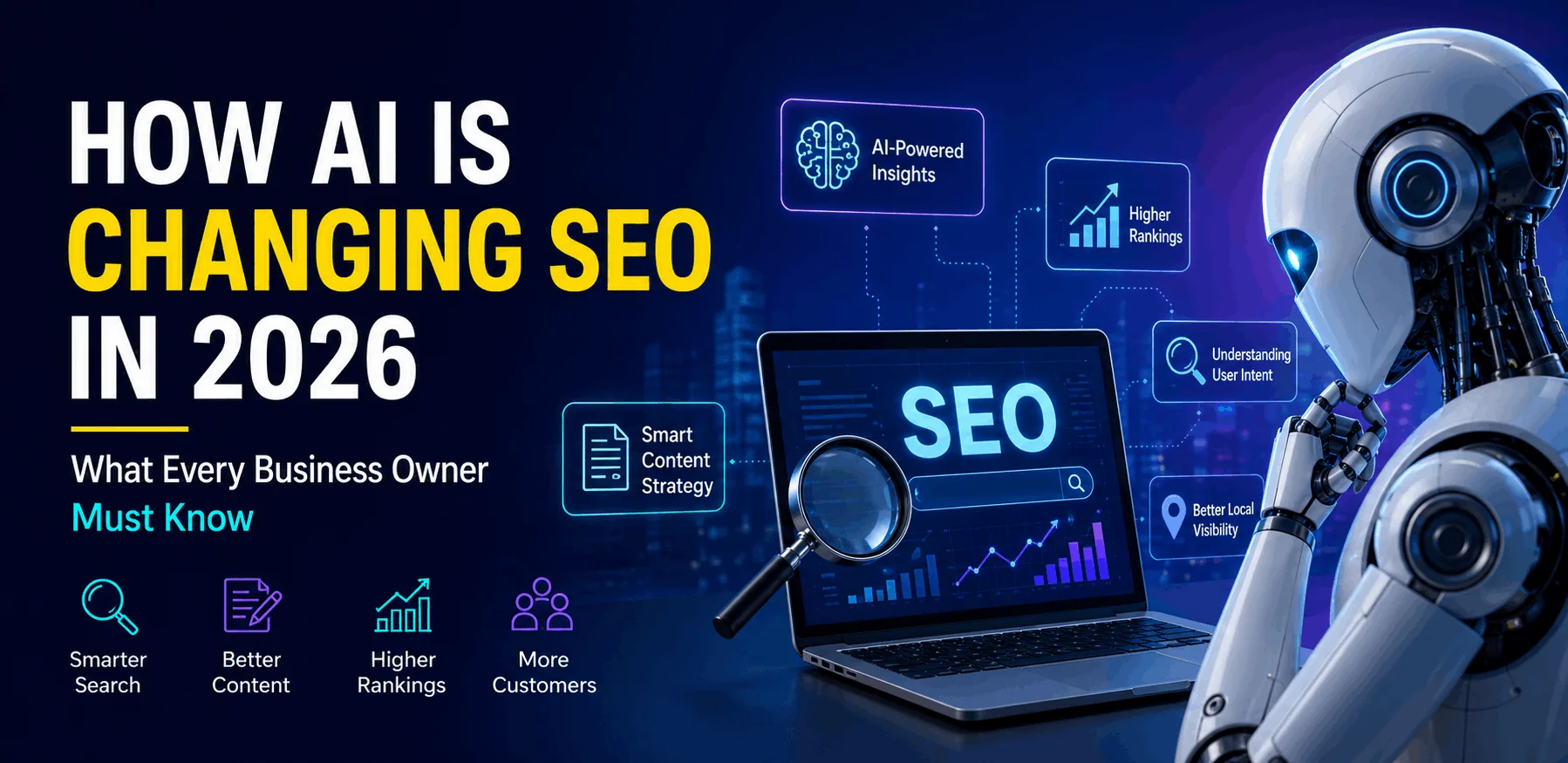
Search Engine Optimization (SEO) has evolved significantly over the last decade, but 2026 marks one of the biggest transformations yet. Artificial Intelligence (AI) is reshaping how search engines understand content, how users search for information, and how businesses compete for online visibility.
For business owners, staying informed about these changes is no longer optional. Understanding the relationship between AI and SEO can help your website attract more visitors, generate quality leads, and stay ahead of competitors.
In this blog, we’ll explore how AI is changing SEO in 2026 and what businesses should do to maintain and improve their search rankings.
How Artificial Intelligence Is Transforming SEO and Search Rankings in 2026
The Rise of AI-Powered Search
Search engines like Google are becoming smarter every year. Instead of simply matching keywords, AI-powered algorithms now focus on understanding user intent, context, and content quality.
When someone searches for a question, search engines aim to provide the most relevant and helpful answer rather than just pages containing exact keywords.
This means businesses need to focus on creating valuable content that genuinely helps users solve problems.
Key Changes:
- Better understanding of search intent
- More personalized search results
- Increased emphasis on content quality
- Improved voice and conversational search
Content Quality Matters More Than Ever
Gone are the days when stuffing keywords into a webpage could improve rankings. AI can now analyze content quality, readability, expertise, and relevance.
Search engines prefer content that:
- Answers user questions clearly
- Provides accurate information
- Demonstrates expertise
- Offers a good user experience
Best Practices:
✅ Write for humans first
✅ Use clear headings and structure
✅ Add real-world examples
✅ Keep content updated regularly
✅ Focus on solving customer problems
AI Is Transforming Keyword Research
Traditional keyword research focused on finding high-volume keywords. In 2026, AI tools help businesses understand:
- User intent
- Related search topics
- Frequently asked questions
- Content gaps
- Competitive opportunities
Instead of targeting a single keyword, businesses should create content clusters around a topic.
Example:
Instead of targeting:
“Website Development”
Create related content such as:
- Benefits of Professional Website Development
- Website Development Trends in 2026
- How Much Does a Business Website Cost?
- Common Website Development Mistakes
This approach helps search engines understand your expertise.
Voice Search Continues to Grow
With smartphones, smart speakers, and AI assistants becoming more advanced, voice search is growing rapidly.
People now search using complete questions such as:
- “Which is the best digital marketing agency near me?”
- “How can I improve my website ranking?”
- “What is local SEO?”
Businesses should optimize content for conversational queries.
Tips:
- Add FAQ sections
- Use natural language
- Target long-tail keywords
- Create question-based content
User Experience Is a Major Ranking Factor
AI helps search engines evaluate how users interact with websites.
Factors that impact rankings include:
Website Speed
Slow websites increase bounce rates and reduce conversions.
Mobile Friendliness
Most searches now occur on mobile devices.
Easy Navigation
Visitors should quickly find the information they need.
Secure Website
HTTPS security remains essential.
A fast, user-friendly website not only improves rankings but also increases customer trust.
AI-Generated Content: Use It Wisely
Many businesses are using AI tools to generate content. While AI can improve efficiency, relying solely on automated content can be risky.
Search engines prioritize content that provides genuine value.
Recommended Approach:
Use AI for:
- Research
- Content ideas
- Outlines
- Content optimization
Add human expertise for:
- Insights
- Examples
- Industry knowledge
- Brand voice
The best-performing content combines AI efficiency with human creativity.
Local SEO Is Becoming Smarter
For local businesses, AI is improving how search engines display local results.
To improve local rankings:
Optimize Your Google Business Profile
Keep business information updated.
Collect Reviews
Positive reviews build trust and improve visibility.
Use Local Keywords
Include city and region-based keywords where relevant.
Create Local Content
Publish blogs and pages relevant to your local audience.
Local SEO remains one of the most effective ways for businesses to attract nearby customers.
Data-Driven SEO Decisions
AI-powered analytics tools can now identify:
- Ranking opportunities
- User behavior patterns
- Content performance
- Conversion bottlenecks
- Competitor strategies
Businesses that regularly analyze data can make smarter marketing decisions and improve ROI.
The Future of SEO
SEO in 2026 is less about gaming algorithms and more about delivering value.
Businesses that focus on:
- Helpful content
- Excellent user experience
- Strong branding
- Technical website performance
- Customer-focused strategies
will continue to grow their online presence.
AI will continue to evolve, but the goal remains the same: providing users with the best possible answers and experiences.
Conclusion
Artificial Intelligence is transforming SEO faster than ever before. Businesses that adapt to these changes will have a significant advantage in attracting customers online.
The future belongs to companies that combine AI-powered tools with human expertise to create meaningful digital experiences.
If your business wants to improve search rankings, generate more leads, and stay ahead of competitors, now is the time to invest in a modern SEO strategy.
Need Help With SEO?
Good Old Geek helps businesses grow through professional SEO, website development, digital marketing, social media management, and branding solutions. Contact our team today to discover how we can help your business succeed online.